Commercial Insurance Requirements for Seattle Businesses (2025)
A guy came into our office last month - he'd just signed a lease for a restaurant space in Capitol Hill. Nice spot, right off Broadway. He'd spent six months planning the menu, negotiating the lease, getting his LLC set up. Then his landlord asked for a certificate of insurance, and he realized he had no idea what coverage he needed or what the state required.
He's not unusual. Most new business owners in Seattle spend months on their business plan, their branding, their build-out - and about twenty minutes thinking about insurance. Then they discover that Washington State, the City of Seattle, their landlord, and their clients all have different requirements, and none of them are optional.
Let me break down what you actually need.
Washington State Requirements
Workers' Compensation - It's the Law
Washington is one of four "monopolistic" states for workers' comp. That means you cannot buy workers' comp from a private insurer. You must get it through the Washington State Department of Labor & Industries (L&I).
If you have any employees - full-time, part-time, temporary - you need L&I coverage. No exceptions. The premiums are based on your industry classification and payroll, and they vary dramatically:
| Industry / Classification | Approximate L&I Rate (per $100 of payroll) |
|---|---|
| Office / clerical | $0.15–$0.30 |
| Retail store | $0.50–$0.90 |
| Restaurant | $1.00–$1.60 |
| Landscaping | $2.50–$3.50 |
| Roofing | $5.00–$8.00 |
| Structural steel work | $7.00–$10.00+ |
For a restaurant paying $300,000 in annual payroll, that's roughly $3,000–$4,800/year in L&I premiums. Not cheap, but getting caught without it is far worse.
Penalty for non-compliance: L&I can fine you up to $2,500 per employee or the estimated premium you would have paid, whichever is greater. They can also issue a stop-work order, which shuts your operation down until you're compliant. And if an employee gets hurt while you're uncovered, you're personally liable for their medical bills and lost wages.
Commercial Auto Insurance
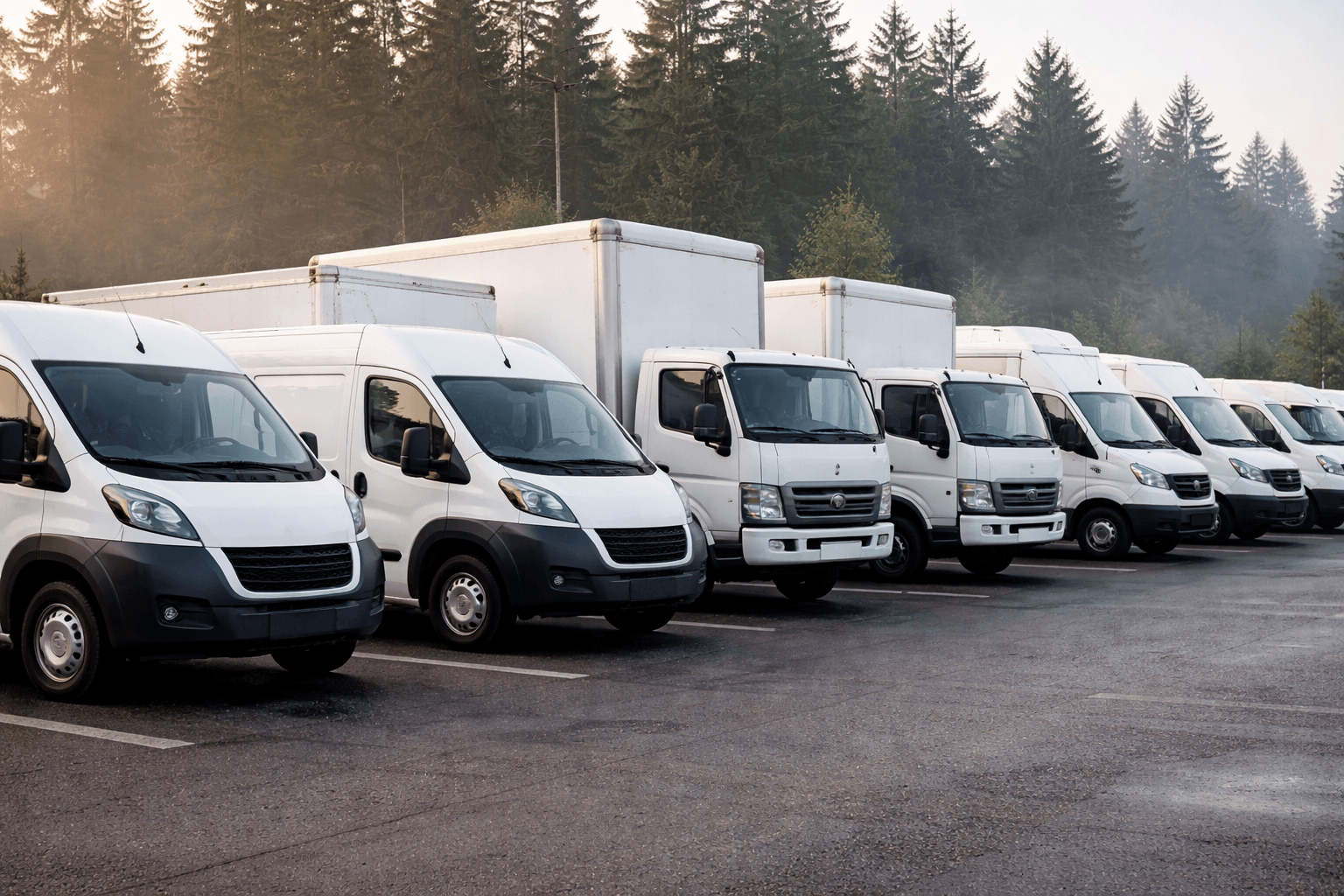
If your business owns vehicles or employees drive for work purposes, Washington requires:
- $25,000 per person / $50,000 per accident bodily injury liability
- $10,000 property damage liability
Those are bare minimums and they're dangerously low for commercial use. A delivery van that rear-ends someone on Aurora Ave can generate $100,000+ in medical bills before anyone hires a lawyer. We typically recommend $1,000,000 combined single limit for commercial auto policies. The jump from minimum coverage to $1M usually costs only $300–$600 more per year. Some of the cheapest meaningful coverage you can buy.
City of Seattle Requirements
Business License Insurance Requirements
The City of Seattle requires specific insurance for certain business types. When you apply for or renew your Seattle business license, some categories trigger insurance requirements:
| Business Type | City of Seattle Insurance Requirement |
|---|---|
| For-hire vehicles (taxi, limo, TNC) | $1M commercial auto liability, filed with the city |
| Street food vendors | $1M general liability naming the city as additional insured |
| Special event operators | $1M general liability per occurrence, $2M aggregate |
| Construction / contractors | $1M general liability + proof of L&I coverage |
| Nightclubs / bars with entertainment | $1M liquor liability (many landlords also require this) |
| Child care facilities | $1M general liability, specific abuse & molestation coverage |
| Cannabis businesses | $1M general liability + product liability |
Even if the city doesn't specifically require coverage for your business type, you'll almost certainly need it for other reasons - which brings us to the next section.
Landlord and Contract Requirements
Here's where it gets real for most small businesses. Your landlord's insurance requirements are usually stricter than anything the state or city asks for.
A typical Seattle commercial lease requires:
- General liability: $1,000,000 per occurrence / $2,000,000 aggregate
- Property insurance on your business contents and improvements
- The landlord named as additional insured on your policy
- Certificate of insurance delivered before you get the keys
If you're in a newer building in South Lake Union or a commercial space in Ballard, the landlord might also require:
- Umbrella/excess liability: $1,000,000–$5,000,000
- Business interruption coverage
- Tenant betterment and improvement coverage (for your build-out)
And if you're doing work for other businesses - consulting, contracting, services - your clients will have their own requirements. Tech companies in the Amazon/Meta/Google orbit often require $2M–$5M in general liability and $1M+ in professional liability (E&O) from their vendors.
Required Coverage by Business Type: Quick Reference
Here's a table I keep on my desk. It covers the most common business types we see walk through our door on Westlake Ave:
| Business Type | General Liability | Workers' Comp (L&I) | Commercial Auto | Professional Liability | Liquor Liability | Product Liability |
|---|---|---|---|---|---|---|
| Restaurant / bar | Required | Required (w/ employees) | If delivery vehicles | No | Required (if serving alcohol) | Recommended |
| Retail store | Required | Required (w/ employees) | If delivery vehicles | No | N/A | Recommended |
| Tech company / SaaS | Required | Required (w/ employees) | Rarely needed | Often required by clients | N/A | N/A |
| Contractor (GC) | Required | Required | Usually required | Recommended | N/A | N/A |
| Consultant / freelancer | Usually needed for contracts | If employees | No | Often required by clients | N/A | N/A |
| Food truck | Required (city requires it) | Required (w/ employees) | Required | No | If serving alcohol | Required |
| Hair salon / barbershop | Required | Required (w/ employees) | No | Required (malpractice) | N/A | Recommended |
| Real estate agency | Required | Required (w/ employees) | Recommended | Required (E&O) | N/A | N/A |
What Happens When You Don't Have Coverage
I'm not trying to scare anyone, but I've seen all of these happen to real Seattle businesses:
No workers' comp: A kitchen worker at a Fremont restaurant slipped and broke her wrist. The owner didn't have L&I coverage. L&I fined him $7,500, he had to pay her medical bills ($22,000), and she hired a lawyer for lost wages. Total cost to the owner: over $45,000. A year of L&I coverage would have cost him about $4,000.
No general liability: A customer tripped over a loose floor mat in a Beacon Hill boutique and fractured her hip. The store had no liability insurance. The lawsuit settled for $185,000. The owner closed the business and filed personal bankruptcy.
No professional liability: A web design agency in Pioneer Square delivered a site with a security flaw that exposed their client's customer database. The client sued for $340,000 in damages and breach notification costs. The agency had no E&O policy. They folded within six months.
These aren't horror stories I made up. They're composites of real situations we've seen in 30 years of writing business insurance in Seattle.
How Much Does It All Cost?
People expect commercial insurance to cost a fortune. For most small businesses, it's surprisingly affordable:
| Coverage | Typical Annual Cost (Small Seattle Business) |
|---|---|
| General liability ($1M/$2M) | $500–$1,500 |
| Business owners policy (BOP) | $750–$2,500 |
| Professional liability / E&O | $600–$2,000 |
| Commercial auto (1 vehicle) | $1,200–$3,000 |
| Workers' comp (L&I, 3–5 employees) | $2,000–$8,000 |
| Umbrella ($1M) | $300–$800 |
A solo consultant working from a WeWork in South Lake Union might need just general liability and professional liability - that's about $1,100–$2,500/year. A restaurant with 10 employees, a liquor license, and a delivery van is looking at more like $8,000–$15,000/year for the full package.
Getting It Done
Here's my recommendation for any new Seattle business:
- Start with your lease. Read the insurance requirements before you sign. We've had clients sign leases that require $5M umbrella policies - that's an extra $1,500–$3,000/year they didn't budget for.
- Register with L&I immediately if you're hiring anyone. Don't wait. The fines accumulate from day one.
- Talk to an independent agent (like us) who can shop multiple carriers. The price difference between the cheapest and most expensive general liability policy for the same business can be 40–60%.
- Get your certificate of insurance before you need it. Landlords, clients, and the city will all ask for certificates, sometimes on short notice.
We set up commercial insurance packages for Seattle businesses every week - from solo freelancers to restaurants to construction companies. Call us at (425) 777-1858 or stop by the office. We'll figure out exactly what you need and get you quotes from multiple carriers the same day.
Need help with your insurance?
Good People Insurance Group shops 8+ carriers to find you the best rate. Free quotes, no obligation.